MOVING TIPS
Moving Families With Care And Trust
500+
Reviews on Google
QUALITY
YOU CAN COUNT ON

Time To Get Packing.
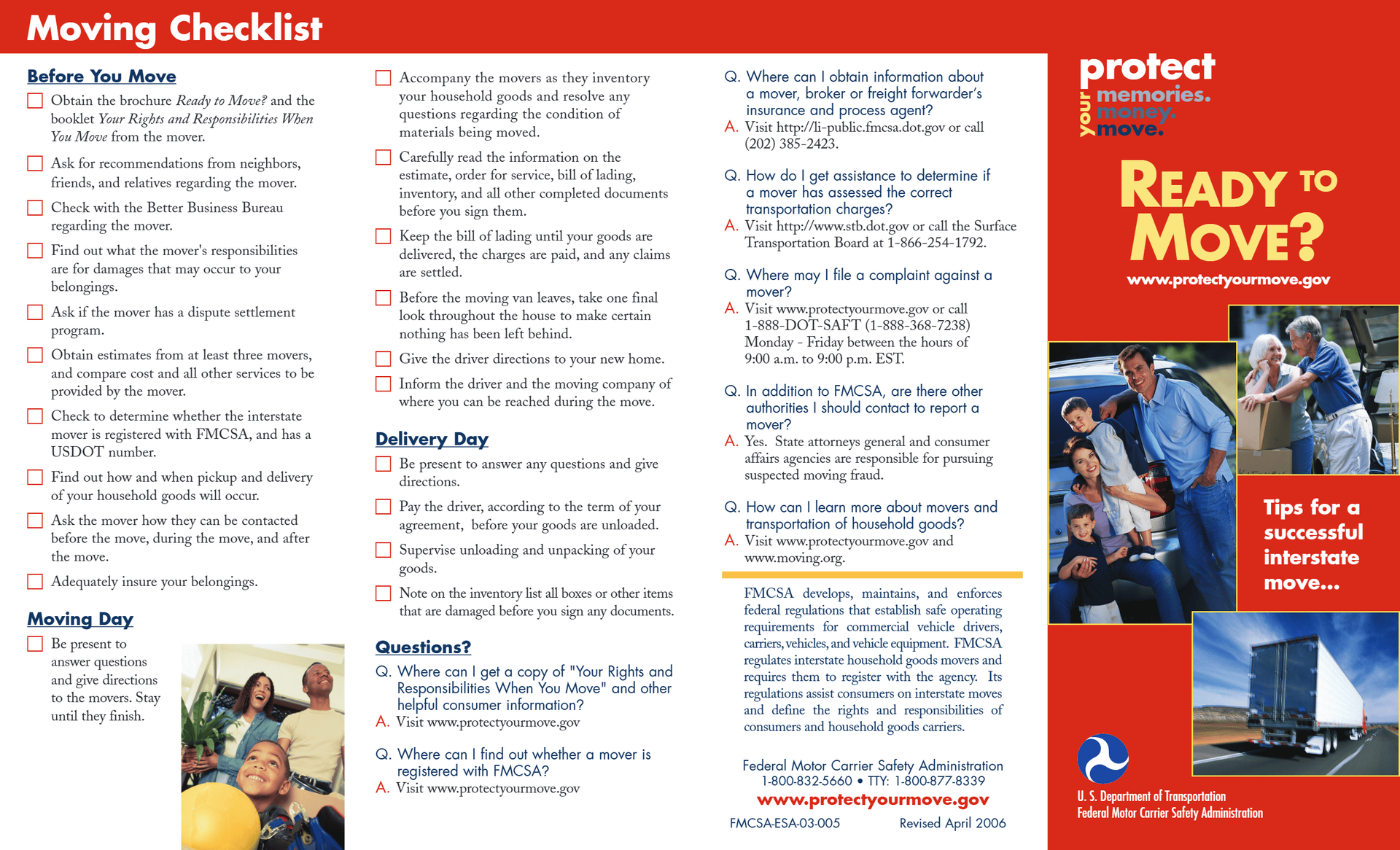
Four weeks out: Change your address, gather medical records, decide what to sell/donate, create a home inventory, and notify utilities, schools, and important organizations about your move.
Three weeks out: Decide what you’ll pack yourself, sketch a floor plan for your new home, gather important contacts, update your moving agent, prepare plans for pets and plants, transfer safety deposit box items, and review or update insurance.
Two weeks out: Finalize packing plans, confirm logistics with your mover, ensure all paperwork and insurance updates are on track, and continue downsizing.
One week out: Prepare payment for movers, handle bank transfers if needed, schedule utility disconnections/reconnections, separate valuables, use up frozen food, and drain fuel from equipment.
One day before: Pack an essentials box, verify packing is complete, and clean/defrost the refrigerator.
Moving day: Be present for the loading process, verify inventory and condition of items, do a final walkthrough, sign the Bill of Lading with correct new address, and shut off utilities.
At your new home: Try to arrive early to ensure utilities are functioning, plan placement of furniture, and be available to pay the driver before unloading.


What Not to Pack
HAZARDOUS ITEMS
For the safety of your shipment, there are several items that are illegal to move on our moving trucks. These items are flammable or combustible, so they cannot be moved on the truck as a safety precaution to prevent fires. Other items, such as cleaning agents and bleach, are both flammable and if they leak they could potentially ruin your furniture on the shipment. Be sure to discard these items before your move or move them in your own vehicle.
- Aerosol cans (regardless of content)
- Flammables (like Sterno, charcoal, lighter fluid, matches, and lighters)
- Nail polish and remover Fire extinguishers
- Alcohol
- Any type of gas in bottles or tanks (including propane or oxygen)
- Paints, varnishes, solvents, thinners and oils
- Household cleaners (like ammonia and bleach)
- Batteries
- Ammunition
- Fertilizers and pesticides
FOOD
Although they're not hazardous, perishable foods and plants also pop up on our things-not-to-pack list. Even though they're not flammable or toxic, they can attract bugs, rats, and other pests that could damage your property -- zero fun for anyone. Common perishables are things like:
- Frozen or refrigerated food
- Produce
- Open food items
- Plants (indoor and outdoor)
- Fresh herbs
- Flowers
Feel terrible throwing away all of that food? No worries! Jersey Moving Pro has partnered up with Move For Hunger!
Moving With Pets
PACKING UP YOUR HOME
Packing Up Your Home Cats aren’t big fans of change. You can help your cats (and skittish dogs) adjust to the moving process by bringing in moving boxes early, and by keeping your furry friends in a familiar room you plan to pack up last. On moving day, keep your pets in a quiet room with the door shut, or at a friend’s house. This will ensure that your cat or dog won’t get scared and try to make a quick getaway while the movers load up the truck. During the moving process, try to keep your pet’s routine as normal as possible.
Planning Your Road Trip
Many pets haven’t spent much time in crates or cars. In the weeks or months leading up to the big trip:
- Prepare your pets by gradually acclimating them to their crates. First, place their food inside an open crate, and eventually have them eat their meals in the crate with the door shut.
- Try carrying your pets around the house in the crate or taking a short drive.
- You can help your pets develop a positive association with the crate by providing treats and playtime at the conclusion of crate time.
Taking these steps will make moving day a lot more comfortable for you and your furry friends.
Pet-Proofing Your New Home
It is a good idea to pet-proof your new home. Tuck away electrical cords, plug up nooks where your pet could get stuck, make sure that all windows have secure screens, remove any poisonous house plants and confirm that no pest-control poison traps have been left anywhere in the house.
Settling In
When you arrive at your new home at the end of your long journey, it will be tempting to set your dog or cat loose in the house to explore. However, a new and unfamiliar space can be overwhelming to your pets.
- Start by allowing them to adjust to one room—their “home base”—which should include their favorite toys, treats, water and food bowls and litter box for cats.
- When they seem comfortable, gradually introduce them to other rooms in the house, while keeping some doors shut.
- You can relocate your cat’s litter box from the “home base” room to a more permanent location by moving it slowly over time. Try moving the litter box one foot forward each day.
With patience, your cat or dog will be king or queen of your new home in no time.